Kenmeet was founded on a simple observation: the organizations with the strictest security and compliance requirements were often being served worst by the meeting platforms available to them. Legal teams, healthcare providers, financial institutions, government agencies, and regulated enterprises repeatedly faced the same problem — "the product looks great, but we cannot confirm where our data lives." For many organizations, that isn't an inconvenience. It's a deployment blocker.
Kenmeet was built differently. Instead of treating compliance as a feature added later, we designed our infrastructure around regional data residency, encryption, and auditability from day one. The meeting experience was built around those requirements — not in spite of them.
🇪🇺 European Union — Frankfurt Region. Dedicated EU infrastructure designed to satisfy GDPR requirements and cross-border transfer obligations.
Middle East — Dubai Region. Regional infrastructure designed for organizations navigating localization requirements across the Gulf region.
Most video platforms were built in a single jurisdiction and expanded globally by exception — routing calls, recordings, and metadata through infrastructure that was never designed for modern data protection laws. For organizations operating under regulations such as GDPR, Saudi Arabia's Personal Data Protection Law (PDPL), or the UAE Federal Personal Data Protection Law, that approach creates unnecessary complexity and risk.
Kenmeet follows a different model. Data residency, encryption, and access controls were foundational design decisions made before the first meeting was ever launched.
Different regions have different expectations around privacy, data ownership, and localization requirements. Rather than forcing every customer into a single compliance posture, Kenmeet infrastructure adapts to regional requirements while maintaining a consistent product experience.
The General Data Protection Regulation established the global standard for consent management, data subject rights, and accountability for international data transfers.
The Gulf region has increasingly adopted sovereignty-focused privacy frameworks that often place stronger emphasis on localization requirements and demonstrable compliance controls.
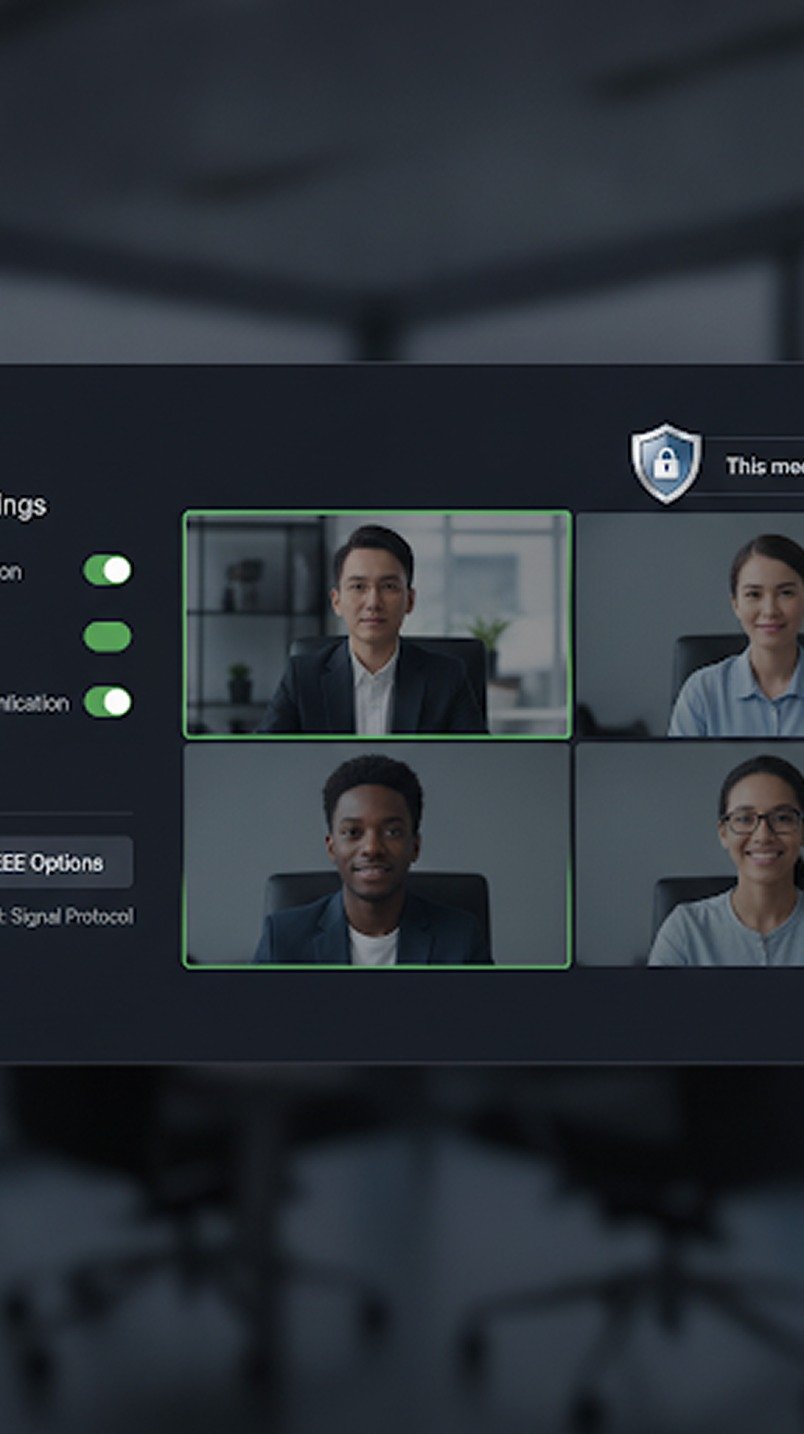
256-bit AES encryption, in transit and at rest, on every meeting, every customer, every plan.
Only the information necessary to run the service. No unnecessary telemetry, no hidden retention.
Documentation covering locations, processing regions, retention, access controls, and subprocessors.
Local infrastructure options without sacrificing the complete Kenmeet feature set.
Available upon request:
Our founding team worked with organizations across European financial services and Gulf public sector projects. Again and again, procurement teams reached the same stage: the security review. Questions around residency, localization, and cross-border transfers delayed deployments for weeks or stopped them entirely. The technology wasn't the issue — the infrastructure assumptions were.
Rather than retrofitting compliance onto an existing product, Kenmeet started with regional infrastructure design: regional hosting, encryption standards, access controls, and auditability. Only then did we build the meeting platform itself.
Kenmeet powers meetings for teams operating in environments where compliance isn't optional — legal services, healthcare providers, financial institutions, government organizations, critical infrastructure operators, and public sector projects. When your auditors ask where your data lives, your answer should be immediate. Not investigative.
Talk to our team about data residency requirements, compliance documentation, security architecture reviews, procurement questionnaires, or enterprise deployments.